Mochi is culturally significant in Japan because its meaning begins in Shinto spirituality: the round rice cake was historically an offering to the gods, its shape believed to represent the moon and to echo sacred mirrors, both symbols of purity. From that sacred origin, mochi spread across the Japanese calendar, taking distinct forms for New Year's, Girls' Day, and Children's Day, each shaped to carry a specific blessing. I want to show you how one humble food holds this entire symbolic system together.
Introduction: Mochi's Enduring Cultural Heartbeat
Mochi is, of course, a year-round treat in Japan, but as the grocer Uwajimaya notes, it carries deeper cultural meanings seasonally, and during certain festivals it becomes strongly associated with good fortune and prosperity. This is especially true at New Year, known as Oshogatsu. What makes mochi remarkable is not just its chewy texture or versatility, but the way a single food can serve as decoration, offering, and meal all within one holiday. To understand why, you have to look past the kitchen and into Japan's indigenous spiritual tradition, where the rice cake's very form was understood as sacred.
The Spiritual Roots of Mochi: Shintoism and Sacred Symbolism
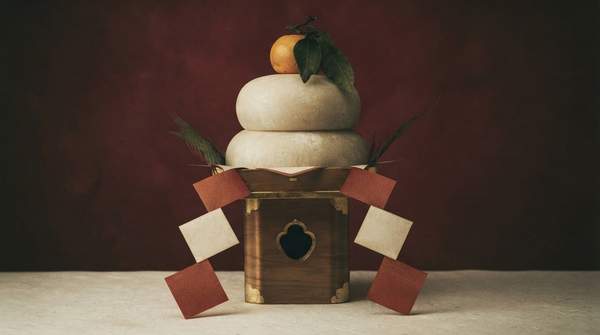
The clearest window into mochi's sacred origins is kagami-mochi, the tiered New Year decoration. Micah Killian, writing for Globalkitchen Japan, explains that kagami-mochi's origins are deeply connected to Shintoism, Japan's indigenous spirituality. In Shinto, mirrors are considered sacred symbols of purity and the soul's reflection, and were historically offered to the gods. Mochi itself, with its round shape, was thought to symbolize the moon, another emblem of purity. Over time, this tradition transformed from a purely religious offering into a significant cultural symbol for the New Year, connecting the spiritual with everyday Japanese life.
Kagami-mochi is typically displayed starting on New Year's Eve, December 31st, to prepare for welcoming the gods of the new year. That is the essential pattern you will see repeated throughout this article: a food born as a divine offering, gradually becoming a household tradition without ever losing its symbolic charge.
Ceremonial Mochi: A Calendar of Cultural Significance
The table below gathers the ceremonial mochi types across Japan's major annual celebrations. Read it as a single framework: in every case, the mochi's form is not arbitrary but deliberately adapted to convey a specific cultural meaning for that day.
| Holiday | Mochi Type | Form and Ingredients | Cultural Meaning |
|---|---|---|---|
| New Year's (Oshogatsu) | Kagami-mochi | A two-tiered stack of round mochi, often topped with a mandarin | An offering to the gods; the round shape represents the moon and sacred mirrors, symbols of purity; displayed from December 31 to welcome the gods of the new year |
| New Year's (Oshogatsu) | Ozoni | A soup of mochi rice cakes with vegetables in miso or soy sauce stock | Symbolizes good fortune, prosperity, and longevity; strongly associated with the New Year and osechi ceremonial foods, with strong regional variations |
| Girls' Day (Hinamatsuri, March 3) | Hishi mochi | Rhomboid-shaped mochi with layers of red, green, and white | A ceremonial dessert presented as a ritual offering in the days leading up to Hinamatsuri |
| Children's Day (Kodomo no Hi, May 5) | Kashiwa-mochi | White mochi surrounding a sweet red bean paste filling, wrapped in a kashiwa oak leaf | Made especially for a day promoting the happiness and well-being of children; chimaki, a dango variation wrapped in bamboo leaves, is also made for this celebration |
Notice the pattern the comparison reveals: whether stacked as a mirror-like offering, layered in festive colors, or wrapped in a leaf, mochi is always reshaped to fit the occasion's particular wish. The same pounded rice becomes purity at New Year's, ritual offering at Hinamatsuri, and children's well-being on May 5.