
Chloe Dubois
Editorial byline
Chloe Dubois is an editorial byline for Lifestyle Lore, with a focus on The culture of vintage shopping, Profiles of independent designers and tailors, The history of a single garment. Biographical credentials and external profiles are published only after verification.
Learn more about our editorial process and use of automation in our AI & Automation disclosure.
Coverage Areas
Latest Articles

From Salt to Art: How European Charcuterie Evolved From Survival to Cultural Ritual
European charcuterie evolved from ancient preservation necessity into distinct culinary arts, with France formalizing diverse cooked and cured products via guilds, and the Iberian Peninsula perfecting air-cured ham rooted in Roman traditions and mountain climates.
Nov 11, 2026 · 4 min read

From Ancient China to Viking Halls: How Mead Became Humanity's Oldest Fermented Drink
Mead, one of the world's oldest alcoholic beverages, originated possibly tens of thousands of years ago and is made from honey, water, and yeast. This article traces its journey from prehistoric discovery through ancient cultures and its modern craft renaissance.
Nov 10, 2026 · 4 min read

Einkorn vs. Emmer vs. Spelt: Which Ancient Wheat Belongs in Your Next Bake?
Choosing between einkorn, emmer, and spelt involves understanding their unique flavors and baking properties, which differ significantly from modern wheat. Spelt is a versatile all-rounder, emmer excels in hearty dishes and chewy pasta, while einkorn offers a buttery, savory note for rustic breads.
Nov 10, 2026 · 4 min read

From Parchment to Pixels: A Short History of Writing in Books
Explore the rich history of marginalia, from ancient scholarly notes and medieval artistry to Renaissance intellectual conversations and 19th-century personal reflection. Discover how this enduring practice of readers engaging with texts continues to evolve in the digital age.
Nov 9, 2026 · 6 min read

Wabi-Sabi at Home: How to Turn Imperfection, Transience, and Emptiness Into Design Choices
Wabi-Sabi is a Japanese aesthetic philosophy that embraces imperfection, transience, and simplicity to create serene, authentic living spaces. Learn how to translate these core principles into practical design choices for your home.
Nov 7, 2026 · 5 min read

Who Is the West African Griot? Historian, Genealogist, Diplomat, and Musician in One Hereditary Calling
A griot is a hereditary West African storyteller, historian, musician, and diplomat, born into their role and undergoing rigorous training to serve as community memory, mediators, and artists. This tradition blends history, music, and diplomacy, preserving oral traditions and cultural heritage.
Nov 7, 2026 · 4 min read

Furoshiki: How a 1,200-Year-Old Japanese Wrapping Cloth Became a Modern Sustainability Tool
Furoshiki, a 1,200-year-old Japanese wrapping cloth, has evolved from protecting temple valuables to becoming a versatile, sustainable tool for modern gift wrapping, carrying, and home decor, offering an eco-friendly alternative to disposable materials.
Nov 7, 2026 · 6 min read

From Court Robes to Kosode: How Japan's Shifting Power Structures Shaped the Kimono
The kimono's evolution is a direct reflection of Japan's shifting political and social structures, transforming from an ancient undergarment to a symbol of national identity. Its changing silhouette, sleeves, and even name are tied to the rise and fall of ruling classes throughout history.
Nov 6, 2026 · 6 min read

How Medieval Illuminated Manuscripts Were Made: From Monastic Scriptorium to Parisian Workshop
Medieval illuminated manuscripts were produced through a sophisticated four-stage process involving specialized artisans, shifting from monastic scriptoria to urban commercial workshops. Understanding parchment making, writing, illumination, and binding reveals the collaborative craft behind these historical objects.
Nov 5, 2026 · 5 min read

Joined, Not Nailed: How Sashimono and Kumiki Define Traditional Japanese Woodworking
Traditional Japanese woodworking, exemplified by Sashimono and Kumiki, utilizes intricate joinery techniques that rely solely on shaped wood, eschewing nails and screws for structural integrity and aesthetic beauty.
Oct 31, 2026 · 5 min read

Beyond 5-7-5: What Actually Defines a Haiku
Discover the true essence of haiku beyond the common 5-7-5 syllable count. Learn about the crucial Japanese elements like 'on', 'kigo', and 'kireji' that define this poetic form.
Oct 31, 2026 · 5 min read

Japanese Stab Binding vs. Coptic Binding: How Two Traditional Spines Differ in Structure and Complexity
Japanese stab binding sews through a stacked block of loose sheets, while Coptic binding sews folded sections together along a flexible spine, fundamentally differing in structure, appearance, and how flat they lie.
Oct 30, 2026 · 4 min read

How Icelandic Turf Houses Were Built: Stone, Timber, and Earth
Icelandic turf houses were ingeniously constructed using a sequence of flat-stone foundations, internal timber frames, and layered turf walls and roofs. This design addressed Iceland's harsh climate and scarcity of wood, creating durable, insulated dwellings that evolved over centuries and became a symbol of national identity.
Oct 30, 2026 · 5 min read

Camino, Via Francigena or St. Olav's Ways? Choosing the Right European Pilgrimage for Your Slow Travel Style
Choosing the right European pilgrimage route like the Camino, Via Francigena, or St. Olav's Ways depends on your desired social experience, infrastructure support, and preferred landscapes for a mindful slow travel journey.
Oct 28, 2026 · 6 min read
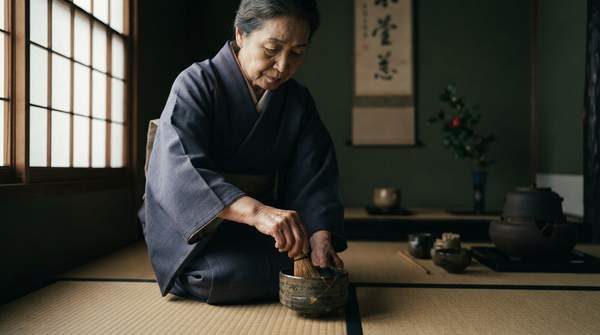
Wabi Cha, Yu-gen, Geido, Satori: The Philosophy That Makes Tea a Spiritual Practice
The Japanese tea ceremony, chanoyu, transcends mere ritual, embodying a spiritual discipline through four core philosophies: wabi cha (simplicity), yu-gen (profound awareness), geido (mastery of form), and satori (awakening). Understanding these concepts reveals how each gesture in the ceremony becomes a meaningful path to mindfulness and spiritual practice.
Oct 28, 2026 · 5 min read

From Steam to Steel: How Michael Thonet's Bentwood Chair Shaped a Century of Furniture Design
Michael Thonet's 1850s innovation of steam-bending solid wood revolutionized furniture design, enabling continuous curves and mass production with his iconic Model 14 chair. This bending principle directly influenced modernist designers, paving the way for bent tubular steel furniture and shaping a century of design.
Oct 26, 2026 · 4 min read

How to Start Urban Foraging: A Beginner's Guide to Safe, Ethical Wild Food in the City
Urban foraging allows beginners to find wild food in cities using parks and field guides, provided they follow strict rules for identification, contamination awareness, and ethical harvesting. This guide offers a checklist for safe, legal, and sustainable wild food gathering in urban environments.
Oct 26, 2026 · 4 min read

Chicha: How the Andes Turned Corn Into Ceremony
Chicha, a traditional Andean beverage made from germinated, cooked, and fermented maize, served as a vital ceremonial offering, political instrument, and daily sign of hospitality in the Inka Empire and beyond. Its artisanal production, involving specific maize varieties and regional adaptations, continues to be a living thread of Andean culture.
Oct 25, 2026 · 5 min read

Ikenobo, Ohara, or Sogetsu? How to Tell Japan's Three Great Ikebana Schools Apart
Explore the unique philosophies and styles of Japan's three major ikebana schools: Ikenobo, Ohara, and Sogetsu. Learn how to distinguish their classical, naturalistic, and modern approaches to flower arranging.
Oct 25, 2026 · 4 min read

How Stave Churches Were Built to Last: The Timber Engineering Behind Norway's 28 Surviving Medieval Churches
Norwegian stave churches owe their survival to a decisive engineering innovation: lifting the entire wooden frame off the damp earth onto stone foundations and horizontal sills. This method prevented rot, allowing these unique medieval structures, which also blend Norse and Christian artistry, to endure for centuries.
Oct 25, 2026 · 5 min read