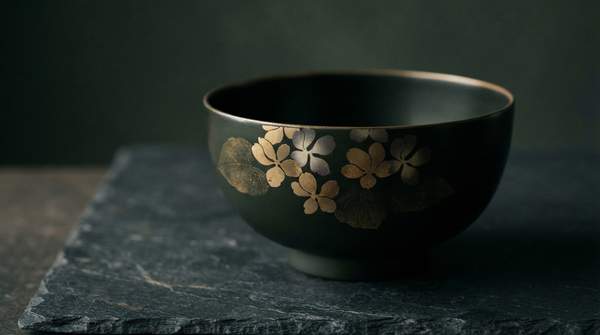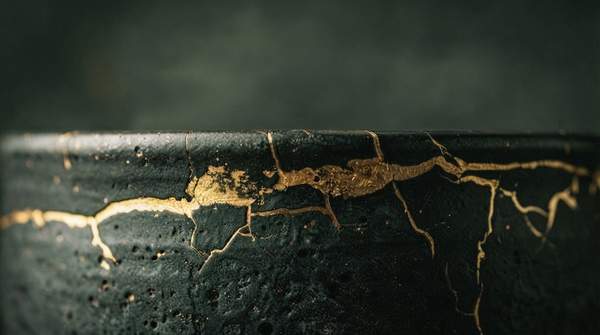
Kintsugi, the Japanese art of mending broken pottery with lacquer dusted or mixed with powdered gold, silver, or platinum, offers more than a striking image of repair. It offers a working philosophy: damage is not something to disguise but something to honor. For readers willing to borrow its logic, kintsugi becomes a repeatable mental model for reframing personal setbacks—not as failures to hide, but as seams of resilience that make a life more, not less, valuable.
The Art of Kintsugi: Embracing Imperfection
When a treasured bowl shatters, the conventional response is disposal. Kintsugi refuses that reflex. As a Mayo Clinic Connect essay on the art form explains, the broken pieces are painstakingly rejoined with lacquer mixed with precious metals over months, and instead of hiding the damage, the cracks are highlighted in gold. The repair becomes the object's most visible feature.
The name itself carries the meaning: the Japanese art and culture writer Azumi Uchitani notes that "kintsugi" literally combines gold (kin) and stitching (tsugi), describing porcelain mended with urushi lacquer dusted with gold or silver. The practice of mending pottery with lacquer reaches back to prehistoric earthenware, though it was around the sixteenth century—when the philosophy of the tea ceremony spread—that kintsugi became recognized as an art form.
Crucially, the repair is not a restoration to a pristine state. The mended vessel is a different object: one whose history is written on its surface. Wikipedia's account of the art notes that Japanese aesthetics values marks of wear from the use of an object, and that a piece might even be deliberately broken and repaired rather than discarded. The flaw is treated as biography, not blemish.
Wabi-Sabi: The Philosophical Roots of Kintsugi
Kintsugi does not stand alone; it draws its worldview from wabi-sabi, the Japanese aesthetic that celebrates impermanence, transience, and imperfection. Wikipedia describes kintsugi as similar to wabi-sabi in its embracing of the flawed or imperfect, while Uchitani ties the art form's rise directly to the tea ceremony, one of whose four principles is respect—respecting and cherishing what we use and what we encounter.
Psychotherapist Laila Narsi, writing at The Mindful Self, frames wabi-sabi as an antidote to a specific modern pressure: unreasonable expectations, whether imposed by ourselves or others, that push us toward unattainable perfection. Against that pressure, wabi-sabi insists that our flaws are integral to our existence rather than deviations from it. The cracked bowl is not a failed bowl; it is a bowl that has lived.
This is the philosophical move that separates kintsugi from ordinary notions of "moving on." Where conventional repair aims to erase evidence of damage, kintsugi treats the evidence as the point. Transience is not a problem to be solved but a condition to be incorporated—and, with gold in the seams, celebrated.