Traditional textiles are not decoration first—they are documents. Across continents, weavers and dyers have encoded cosmology, social rank, historical events, and spiritual protection into geometric bands, mud-drawn symbols, and embroidered motifs. I want to show you how to read this symbolic language. By comparing five distinct traditions—Andean weavings, Kuba cloth, Bogolanfini, Paisley, and Scottish tartan—you can learn to identify a pattern's visual elements and trace them to the cultural meanings their makers intended.
Andean Weavings: Stories in Every Stitch
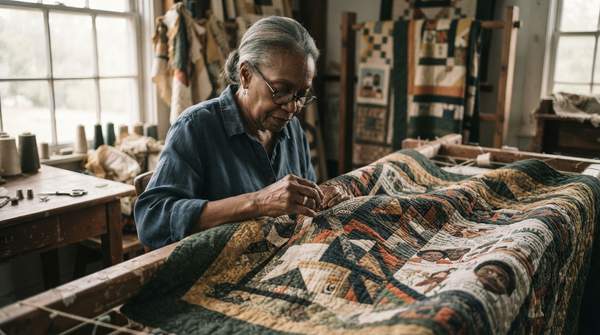
In the Peruvian and Bolivian Andes, brightly colored textiles are woven using techniques passed down through generations. The patterns often depict natural scenes, animals, or geometric shapes, and each element carries cultural or spiritual meaning. The vivid colors themselves are part of the message: they come from natural dyes made from plants, minerals, and insects, reflecting what cultural organizations describe as the close relationship between Andean people and their environment.
Some Andean textiles carried extraordinary value. Writing on pre-Columbian fashion, Mariana Carrera Díaz de Ita notes that the qompi—finely woven textiles—were considered more valuable than gold and were used as offerings to the gods or as diplomatic gifts. Each design, she explains, carried a message, often encoding historical or spiritual narratives. A garment could therefore function simultaneously as clothing, as a record of events, and as a sacred object.
The material foundation is local and seasonal. Alpacas are indigenous to the Peruvian Andes, and their soft fleece is central to the region's textile history. According to the George Washington University Museum and The Textile Museum, women and children in rural mountain villages spend much of their time tending alpacas, llamas, and sheep, shearing the fleece once a year to weave at home or sell at market. Alpaca fiber is prized worldwide for its warmth and softness—qualities that made these cloths both practical and prestigious.
Kuba Textiles: Geometric Narratives of Central Africa
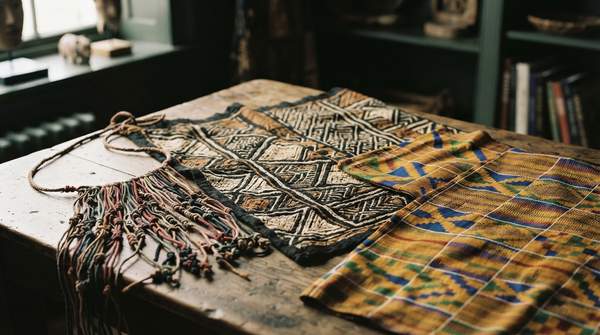
From the seventeenth to the twentieth century, neighboring tribes in central Africa united as the Kuba Kingdom, and their textiles developed into one of the most sophisticated geometric languages in the world. Traditional Kuba cloth is woven from raffia palm tree fiber, with a distinctive division of labor: men cultivated the palms and wove strips of cloth, while women stitched the pieces together, dyed them, and embellished them with bold geometric patterns.
What makes Kuba cloth remarkable is the sheer scale of its vocabulary. The museum account records that hundreds of patterns exist to describe events, objects, or places, as well as to honor the maker or the recipient. A single textile could thus commemorate a specific occasion, reference a landmark, or pay tribute to a person—functioning as a woven chronicle rather than a generic ornament.
Cultural commentary on African textile traditions adds that Kuba patterns have served to express proverbs, historical events, social hierarchies, status, lineage, and spiritual protection. I should be precise about the limits of what can be decoded here: the general categories of meaning are well documented, but specific named patterns with direct translations are not, so I present Kuba symbolism at the level of these documented categories rather than inventing pattern-by-pattern glosses.
Bogolanfini: Earth's Canvas and Cultural Identity
Bogolanfini—Malian mud cloth—is among the most distinctive textile traditions of West Africa, marked by geometric patterns and symbols created through a unique mud-dyeing process. The cloth's visual character comes directly from its environment: the fermented river mud used as dye gives bogolanfini its characteristic earthy palette, making the landscape itself an ingredient of the design.
The symbols are not arbitrary. Cultural accounts of the tradition record that bogolanfini patterns communicate social status, historical narratives, and spiritual beliefs, with each pattern carrying specific meanings. The cloth has traditionally been worn for spiritual protection, especially during significant life events—so a person passing through a threshold such as a birth, coming of age, or healing might wear a textile whose symbols were understood to guard them.
This is where the symbolic language becomes most legible to an outside reader: the pattern is a prayer, a biography, and a status marker at once. The same West African region offers a useful contrast in technique. The Textile Museum describes adire, practiced by the Yoruba people of Nigeria, in which raffia and starch are used to tie off areas of cotton cloth before it is immersed in large indigo dye vats, the tied areas creating patterns against a blue background. Where bogolanfini adds earth to cloth, adire subtracts color from it—two opposite processes arriving at the same goal of meaningful pattern.
Paisley and Tartan: Global Journeys of Iconic Patterns
Paisley and tartan make an instructive pair, because both are patterns whose popular symbolic readings diverge from their documented histories. The Paisley design, with its iconic teardrop shape, originated in Persia and later became widely popular in India. The motif is often associated with fertility, life, and eternity, and it was traditionally used in shawls and other textiles before becoming a versatile pattern in fashion and decor worldwide.
Tartan's story is more surprising. Today it is a powerful symbol of Scottish heritage, with each pattern, or "sett," popularly understood as unique to a specific clan or family. But the Scottish Tartans Museum and Heritage Center states plainly that originally, tartan designs had no names and no symbolic meaning. All tartan cloth was hand woven and usually supplied locally; while certain colors or motifs may have been more common in some areas, no regulated or defined clan tartan system ever existed. By the seventeenth and eighteenth centuries, tartan had become characteristic of Highland dress—but as a regional fashion, not a coded registry of families.
National Records of Scotland reinforces this: an early checked cloth dating from around the third century AD was woven using two different types of wool for coloration, and the shepherd's plaid—a simple checked cloth worn for warmth—had no connotations linking the wearer to a tribe or geographical location. The clan association is a later development. Yet the museum is equally clear that tartans today do have meaning: when you wear one, you identify yourself with what it represents, whether a clan, a district, or another affiliation. Design historian Richard Martin captured this quality in 1988, describing tartan as a "vessel or container of meaning" capable of conveying radically different, even contradictory, contextual meanings through socio-cultural change. The symbolism is real—but it was made, not inherited.
Comparative Guide to Textile Symbolism
The table below maps each tradition's visual elements to its documented meanings and materials, so you can compare at a glance how five cultures encode identity, history, and belief in cloth.
| Tradition (Region) | Key Visual Elements | Symbolic Meaning | Materials & Creation Process |
|---|---|---|---|
| Andean Weavings (Peru, Bolivia) | Bright colors; natural scenes, animals, geometric shapes | Cultural and spiritual meaning per element; qompi fine weavings encoded historical and spiritual narratives and served as offerings to gods or diplomatic gifts | Alpaca, llama, and sheep fleece, shorn once yearly; natural dyes from plants, minerals, and insects; hand-woven |
| Kuba Textiles (Central Africa) | Bold geometric patterns; hundreds of distinct motifs | Describe events, objects, or places; honor maker or recipient; express proverbs, hierarchy, status, lineage, and spiritual protection | Raffia palm fiber; men wove strips, women stitched, dyed, and embellished |
| Bogolanfini (Mali, West Africa) | Geometric patterns and symbols in earthy tones | Communicate social status, historical narratives, and spiritual beliefs; worn for spiritual protection at significant life events | Mud-dyeing with fermented river mud |
| Paisley (Persia, India) | Iconic teardrop-shaped motif | Often associated with fertility, life, and eternity | Traditionally used in shawls and other textiles |
| Tartan (Scotland) | Crisscrossed horizontal and vertical bands in wool | Originally no names or symbolic meaning; today each sett signifies clan, district, or heritage identity | Hand-woven wool, historically using two wool types for coloration |
Reading across the rows, a pattern emerges: Andean weavings bind cosmology to camelid fleece and local dyes; Kuba cloth turns raffia into a communal archive; bogolanfini makes the river itself the dye; Paisley carries a fertility motif across empires; and tartan shows that meaning can be created by culture even where none originally existed. The comparison also shows where the record is thinner—Paisley's traditional materials and processes are not documented in the sources gathered here, so that cell stays deliberately brief.
The Craft Behind the Code: Materials and Processes
What the table compresses deserves emphasis: in these traditions, the material is inseparable from the meaning. Kuba cloth could not exist without the raffia palm, nor bogolanfini without the Niger river region's mud, nor Andean weavings without the alpacas that Andean families tend year-round. The Textile Museum's account makes clear that creation was social work—Kuba men weaving, Kuba women stitching and dyeing; Andean women and children shearing fleece annually. The skill itself, passed through generations, is part of what the textile records.
Technique also shapes what can be said. Adire's tied resist produces patterns against indigo; mud-dyeing builds symbols up from earth; weaving builds geometry line by line. Each process affords a different kind of statement, which is why the same "geometric pattern" can mean something entirely different in raffia, wool, or mud-dyed cotton. When you handle or view one of these textiles, the material tells you which tradition—and which vocabulary—you are reading.
Reading the Threads: A Deeper Appreciation of Cultural Heritage
To fully appreciate traditional textiles, observe not just the aesthetic patterns but also research the cultural context, materials, and creation processes that imbue them with meaning. A tartan sett is a modern emblem of heritage, not an ancient clan code; a Kuba motif may commemorate a specific event; a bogolanfini symbol may be worn as protection at a life transition. The measure of your understanding is concrete: the reader can identify at least three distinct textile patterns and articulate one specific cultural meaning or material significance for each, demonstrating an enhanced understanding of textiles as cultural documents. Start with the five in the table above, and you will already read cloth the way its makers intended—as a record, a prayer, and an identity, woven together.
Sources
- Patterns of the World: Textiles & Culture - Nwami International Malta — Nwami International Malta - Together For A Brighter Tomorrow
- The enduring influence of pre-Columbian fashion — Meer
- Textile Traditions | The George Washington University Museum and The Textile Museum
- What is Tartan? - The Scottish Tartans Museum and Heritage Center, Inc.
- Tartan: the fabric of a nation — National Records of Scotland (NRS)