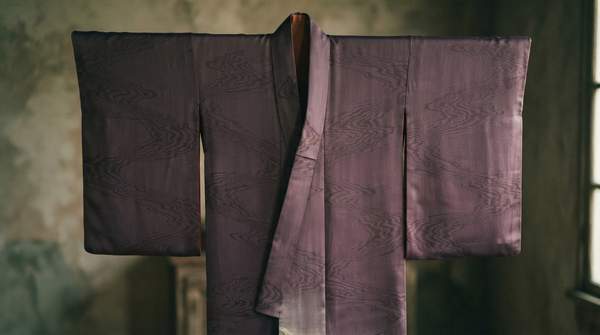
The garment the world calls the kimono is not a single invention but the survivor of a thousand-year process of subtraction and refinement. Its direct ancestor is the kosode—literally "small sleeve"—an under-robe that rose from hidden layer to outer garment between the Heian and Edo periods. What makes the kimono remarkable is that this shift in form did not strip the garment of meaning. On the contrary, its colors and decoration became a visual language through which Japanese wearers communicated status, age, marital availability, season, and taste, sometimes in deliberate defiance of official rules about who could wear what.
The Kimono's Ancient Roots: From Undergarment to Outer Robe
The story begins with influence from the Asian mainland. According to the Minneapolis Institute of Art, fashion of the Nara period (645–794) was highly influenced by Chinese styles, especially in the use of silk. That imported aesthetic soon took a distinctly Japanese turn. During the Heian period (794–1185), elite women wore as many as fifteen to forty layers of clothing at once.
Layering did more than insulate; it educated the eye. As the practice of wearing kimono in layers came into fashion, Web Japan's historical account explains, people began paying attention to how different colors looked together and developed a heightened sensitivity to color. Color combinations typically represented either seasonal colors or the political class to which one belonged—the origin of what are now thought of as traditional Japanese color pairings.
This was also when clothing began to mark social position explicitly. From the late Nara period through the Heian period, Web Japan records, the clothes people wore began to differ depending on whether they were members of the nobility or ordinary citizens. The kosode itself existed at this stage, but as a basic undergarment worn beneath the elaborate layered ensembles—not yet a garment anyone would display in public.