Wabi-Sabi is a Japanese aesthetic philosophy built on three ideas: imperfection is beautiful, transience is to be appreciated rather than resisted, and simplicity—especially the quiet space between things—creates serenity. Applied to interior design, it means choosing raw wood over polished laminate, keeping a worn table rather than replacing it, and leaving a wall partly empty on purpose. In this article, I'll walk you through what each tenet actually asks of a room, then give you a framework that translates the philosophy into concrete decisions about materials, color, objects, and layout.
Understanding Wabi-Sabi: Core Principles for a Mindful Home
At its core, Wabi-Sabi is less a decorating style than a way of seeing. Design writers describe it as a philosophy that "celebrates imperfections in objects as it showcases their history and character"—an old beam or a piece of furniture that carries significance for the person living with it. The Interior Design Institute frames the same idea from the design side: by celebrating imperfection and embracing simplicity, you create spaces that feel "grounded, authentic, and connected to nature," where functionality and emotional comfort coexist.
What makes this philosophy practical is that it removes a source of stress rather than adding a layer of rules. As one student essay on Japanese interior philosophies put it, Wabi-Sabi is about "not dwelling on imperfections to avoid stress"—living with flawed materials can, in that view, add a measure of inner peace to daily life. The design industry has condensed the approach into a few working principles: order is peace, because uncluttered spaces promote mental calm; imperfection is beautiful, because irregularities carry unique charm; the old is sustainable, because reusing and restoring durable materials is both necessary and attractive; and simplicity is essential, meaning fewer objects in a room, but objects with more meaning.
The Three Pillars: Imperfection, Transience, and Simplicity
The first pillar, imperfection, is the one most often misunderstood. In Wabi-Sabi, a crack in wood, a stain of faded paint, or a trace of wear is not a flaw to hide but a detail that adds depth and character to a space. The point is appreciation, not manufacture: you select materials and objects whose natural irregularities already exist, rather than damaging things to make them look rustic.
The second pillar, transience, extends that appreciation through time. Emilceramica's design writers describe "imperfect design" as an entire philosophy of life that invites us to reconsider our relationship with imperfection and the transience of things—every sign of wear "tells a story." Practically, this means valuing items that show their age and use, recognizing their history and evolving beauty. Again, the distinction matters: this is natural aging from a life well used, not neglect or damage.
The third pillar is simplicity and emptiness, captured in the Japanese concept of ma—the space or pause between objects or sounds. In Wabi-Sabi interiors, ma represents the quiet spaces that balance a room's energy and enhance the aesthetics of simplicity. The emptiness between objects is just as important as the objects themselves, contributing to balance and harmony, and making a space feel airy and free. Together, the three pillars turn design into a mindfulness practice: each choice asks whether an element calms the room or competes for its attention.
Wabi-Sabi Design Framework: Translating Philosophy into Your Home
Here is the framework I promised. Each row starts from a philosophical tenet and maps it to a specific design category, so you can select a material, color, object, or arrangement deliberately to express a principle rather than imitate a look. Note the qualifications built into the table: asymmetry should feel natural, not contrived; wear should come from age and use, not damage; and emptiness is a design element, not an absence of effort.
| Core Tenet | Design Element | Application Principle |
|---|---|---|
| Embracing Imperfection | Materials | Incorporate raw, organic materials like wood, stone, and linen that showcase natural textures and flaws—appreciating inherent characteristics, never damaging items to create them. |
| Embracing Imperfection | Object Selection | Choose handcrafted pieces with simple lines, an aged appearance, and natural asymmetry—irregularity should feel organic, not contrived or unbalanced. |
| Appreciating Transience | Object Selection | Value items that show signs of wear and tear, recognizing their history and evolving beauty—natural aging from use, not neglect. |
| Valuing Simplicity & Emptiness (Ma) | Color Palette | Use a subdued, natural palette—earth tones, beige, sand, stone gray, off-white—with subtle pastels like sage green, smoky blue, or powder pink; avoid vibrant, overwhelming hues. |
| Valuing Simplicity & Emptiness (Ma) | Object Selection | Keep only essential, functional objects that are simple and natural; each piece should have a purpose or evoke calm, with no clutter. |
| Valuing Simplicity & Emptiness (Ma) | Spatial Arrangement | Emphasize negative space and voids to create balance and an airy feel—the emptiness between objects is as important as the objects themselves. |
Read the table as a decision path, not a checklist. If a room feels restless, ask which tenet is missing: too many flawless, matching surfaces suggests imperfection is being suppressed; a palette drifting toward saturated color suggests ma is losing ground. The framework also clarifies what Wabi-Sabi is not—it is not Japandi or slow design, though it coexists with those trends, and it is not a license for shabbiness.
Applying Wabi-Sabi: Practical Examples for Living Rooms and Bedrooms
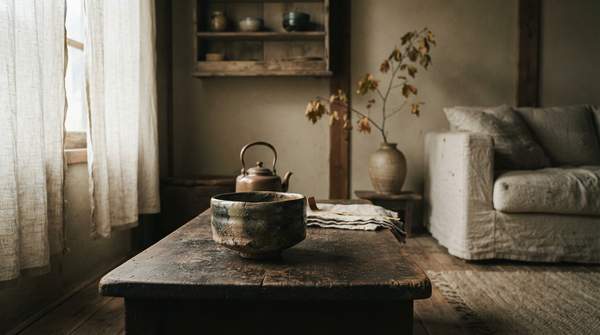
In the living room, start with furniture. Rustic pieces with simple lines and an aged or handcrafted appearance are foundational: restored or rustic wooden tables, low benches, cabinets without handles, and furniture whose imperfections fill the space with its own history. A knotted, weathered table does more work here than a flawless one, because its surface already expresses the first two tenets. Around it, keep only objects that earn their place—a handmade ceramic vase, a linen throw—and let the negative space between them carry the composition.
The bedroom is where the philosophy pays its deepest dividend. Emilceramica describes the Wabi-Sabi bedroom as "a refuge of peace and simplicity," an oasis of tranquility within the home—a place to retreat for rest and rejuvenation. That function argues for the strictest application of the framework: a subdued palette of beige, white, and gray; warm, diffused lighting rather than harsh direct sources; bedding in natural fibers; and deliberately generous emptiness around the bed. Remove anything that does not serve rest. The measure of success is not how the room photographs but how it feels at the end of the day.
Cultivating Serenity: The Role of Space and Authenticity
What ties these choices together is authenticity. A Wabi-Sabi room does not perform rusticity; it is assembled from materials and objects whose character is real—wood that actually aged, linen that actually wrinkles, a table that actually bears the marks of its use. The philosophy's designers argue that this authenticity is what makes the style sustainable as well as beautiful: reusing, restoring, and choosing durable materials is framed as both necessary and attractive, with craftsmanship paramount.
The serenity claim deserves honest qualification. The degree of tranquility and reflection a Wabi-Sabi room produces is subjective—it depends on your perception and on how well the whole design is executed. What the evidence does support is the mechanism: minimalism and negative space are used to create peace, clarity, and an indoor sanctuary, while natural materials and subdued color reinforce a connection to nature. Emilceramica's writers summarize the practice as learning "to slow down, to appreciate simple things, and to find beauty in life's imperfections."
Creating Your Wabi-Sabi Sanctuary: A Path to Mindful Living
Begin with one room and one tenet. Identify which principle you most want to emphasize—imperfection, transience, or simplicity—then apply the corresponding choices from the framework: select the materials, edit the objects, set the palette, and arrange the space so the emptiness does as much work as the pieces. A single worn wooden table in an otherwise uncluttered living room, or a bedroom stripped to natural fibers and warm, diffused light, is a complete first project. The measurable indicator of success is a noticeable increase in feelings of calm, authenticity, and connection to natural elements within the designed space. If, after living with the room for a few weeks, you feel that shift, the philosophy is doing its work—and you can carry the framework to the next room.