Choosing a traditional European garden style is less a question of plants than of philosophy. The Italian Renaissance garden, the French formal garden, and the English landscape garden each encode a distinct answer to the same question: how should a human hand relate to nature? The Italian and French traditions impose geometry, symmetry, and control, while the English tradition curates an idealized, apparently natural scene. The trade-offs between those visions—especially in maintenance effort—are the practical heart of the decision.
Introduction to European Garden Traditions
Writing on garden classification in Contemporary Aesthetics observes that a garden's purpose shapes nearly every formal choice: its paths, its plant palette, its spacing, and its ornamental additions. A garden built to evoke identity, for instance, draws on elements that summon "a memory, a culture or nation, a historical period," while a garden meant for contemplation supplies benches and statuary positioned to focus attention. That framing is useful here, because the three great European traditions are not merely visual templates. Each is a statement about what the garden is for—display and mastery in the Italian and French cases, a gentler psychological experience in the English one.
Italian Renaissance Gardens: Order and Human Mastery
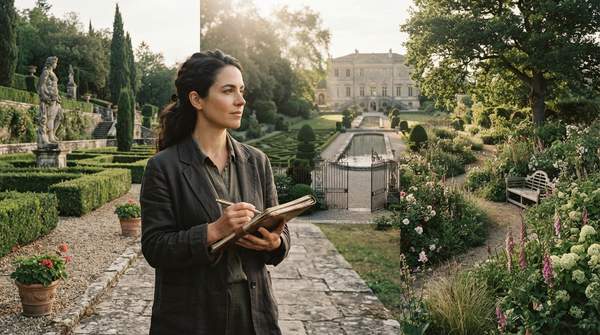
Formality is the defining descriptor of the Italian style, according to landscape designer Robyn Schmitz, writing for High Prairie Outdoors. The look relies on statues, fountains, symmetry, geometric shapes, and clipped hedges, with strong upright feature plants—classically Italian Cypress—intermixed among the formal plantings. The philosophical reading is consistent: European formal traditions, as a comparison piece from Rhinoceros Manufacturing's knowledge pages puts it, "highlight the human ability to shape and control nature," standing as symbols of power, rationality, and cultivated beauty. The Italian garden is the ancestor of that lineage, structured and architectural, where the design asserts human mastery over the landscape. Its clipped forms and geometric beds also imply sustained upkeep.
French Formal Gardens: Grandeur and Absolute Control
The French formal garden descends directly from the earlier Italian Baroque design, as Schmitz notes, but pushes the same principles to a monumental scale. Rhinoceros Manufacturing's comparison singles out Versailles as the type example: strict symmetry, axial design, and manicured hedges, with sculptures, fountains, and architectural features adding grandeur and drama. Structured beauty at a large scale is the explicit goal—what the same source calls a symbol of power and rationality. Where the Italian garden integrates architecture and terraces into a composed hillside setting, the French style extends its axis across vast level ground, reading as a monumental expression of dominance over nature. The manicured precision is not incidental; it is the point.
English Landscape Gardens: Idealized Nature and Contemplation
The English tradition breaks from both. Where Versailles insists on the axis, the English garden embraces sweeping lawns, artificial lakes, winding paths, and what Rhinoceros Manufacturing calls "curated wildness"—nature arranged to look unplanned. Schmitz adds the texture of the style: turf used to draw the eye, create paths between billowy gardens, and delineate space, with Gertrude Jekyll and "Capability" Brown named as its two most notorious designers. The philosophy is a deliberate inversion of the formal traditions' control; the hand is hidden rather than displayed, producing an idealized landscape for strolling and contemplation rather than a demonstration of power. On the same source's account, these landscapes are lower maintenance than their Italian or French counterparts.
European Garden Styles: A Decision Matrix
Setting the three traditions side by side exposes the underlying trade-off. The formal styles rise in grandeur and precision together with their upkeep; the English style trades overt control for a looser, less demanding frame.
| Style | Core Philosophy | Key Features | Implied Maintenance |
|---|---|---|---|
| Italian Renaissance | Structured design and human mastery over nature; formality as the defining trait | Statues, fountains, symmetry, geometric shapes, clipped hedges; strong upright feature plants such as Italian Cypress | High — continuous clipping and upkeep of formal structures |
| French Formal | Monumental expression of human dominance and aesthetic control; a symbol of power and rationality | Strict symmetry, axial design, manicured hedges; sculptures, fountains, and architectural features at grand scale (Versailles as type) | Very high — intricate patterns and extensive clipping at large scale |
| English Landscape | Curated, idealized nature inviting contemplation; less overtly controlled | Sweeping lawns, artificial lakes, winding paths, billowy plantings, turf for paths and spatial definition; associated with Jekyll and "Capability" Brown | Lower — reported as lower maintenance than Italian or French styles |
Read across the rows, the matrix shows a coherent gradient: the more the design insists on visible geometry and human order, the more labor it demands. The English column inverts both axes at once.
Aligning Your Garden with Purpose and Lifestyle
The Contemporary Aesthetics classification framework suggests asking first what the garden is for. If the answer is a statement—of order, of heritage, of the owner's command over the land—then the Italian or French tradition fits, and the choice between them becomes one of scale and architectural ambition. If the answer is a place that slows your pacing and invites sitting, looking, and feeling rather than demonstrating, the English landscape tradition is the closer match, with its paths, water, and billowy borders.
Practical limits matter as much as philosophy. The formal styles' clipped hedges and precise geometry presuppose a willingness to maintain that precision; the English style's relaxed frame tolerates a lighter hand. One caution from Schmitz's regional perspective is worth keeping in mind: even iconic plants are not universal, as her Kansas City designers substitute Taylor Juniper for Italian Cypress, which does not succeed in that climate. Historical principles travel; specific plantings do not.
Cultivating Your Vision: Choosing the Right European Garden Style
The decision, then, is to select a garden style—Italian, French, or English—based on your desired relationship with nature, your aesthetic preference for formality versus naturalism, and your willingness to commit to the maintenance that each implies. A reader drawn to visible order and status signaling should weigh the Italian garden's architectural formality against the French garden's monumental axis; a reader seeking contemplation and a lighter maintenance burden should look to the English landscape tradition.
You will know the choice has landed when you can articulate your preferred style's core philosophy and name its defining features—symmetry and clipped hedges for the formal traditions, sweeping lawns and curated wildness for the English—and explain what those features demand of your own space. That articulation, more than any plant list, is the measurable next milestone on the path from historical inspiration to a garden of your own.
Sources
- Context and Form in Garden Classification – Contemporary Aesthetics — Contempaesthetics
- Understanding European Garden Styles – High Prairie Outdoors — High Prairie Outdoors & Pools
- East Meets West: A Comparison of Chinese Garden and European Garden Styles - Knowledge — Rhinogardening