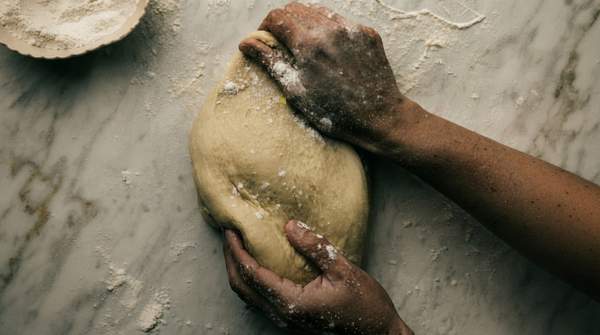
For most of human history, the act of making leavened bread relied on a complex, living culture of wild microbes captured from the environment. This ancient method, known as sourdough, is not merely a recipe but a tradition rooted in a symbiotic relationship between wild yeasts and bacteria. Long before the invention of commercial yeast, this microscopic ecosystem was the sole leavening agent for bread, creating the distinct sour flavor and chewy texture that has been cherished for millennia. The process begins with a simple mixture of flour and water, a starter, which when left to ferment, cultivates the wild yeasts and lactobacilli naturally present in the flour and the surrounding air.
From Ancient Egypt to the Gold Rush: Sourdough's Historical Milestones
The history of sourdough is deeply intertwined with the history of agriculture and civilization itself. According to The Encyclopedia of Food Microbiology, bread production relied on sourdough as a leavening agent for the vast majority of human history. One of the oldest known sourdough breads dates to 3700 BC and was discovered in Switzerland, but the encyclopedia suggests its origins likely trace back even further, to the dawn of agriculture in the Fertile Crescent and Egypt thousands of years earlier. Archaeological evidence confirms that ancient Egyptians were making sourdough bread as early as 1500 BC, using a simple but effective technique of mixing flour and water and leaving it in the sun to ferment.
From its origins in Egypt, the practice of sourdough baking spread throughout the Mediterranean. The ancient Greeks and Romans both made sourdough bread, and the Roman author Pliny the Elder described several methods for its leavening. It became a staple food for soldiers and peasants, a testament to its reliability and the nutritional value unlocked by fermentation. This tradition continued unbroken through the Middle Ages and into the Renaissance, with bakers gradually refining their techniques and developing regional variations based on local grains and microbes. In the 18th and 19th centuries, sourdough became essential to the expansion of the American West.
Pioneers and settlers valued the starter because it was a portable, self-sustaining leavening agent that could be used on the trail. It gained particular fame during the California Gold Rush, where a well-maintained sourdough starter was considered a valuable commodity among miners.