Heirloom recipes are worth preserving for two intertwined reasons: they anchor broad cultural identity, and they keep a personal, emotional thread to your ancestors alive. But they are also fragile. As Catherine Lambrecht of the Culinary Historians of Chicago notes, many family recipes are "never documented in written or photographic form, existing only as unwritten know-how and lore that vanishes when a cook dies"—and even written ones are often damaged on busy countertops. The good news is that a simple assessment of format, condition, and completeness can tell you exactly where to start.
The Enduring Value of Family Recipes
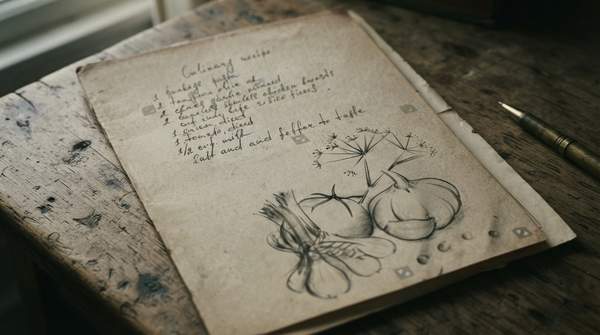
A recipe is rarely just a set of instructions. Writing in Taste of Home, Emily Way spoke with preservation experts who framed old recipe cards as intimate artifacts: "A recipe is never really just a recipe," one expert, Rachel, told her. "It's a little time capsule: the handwriting, the smudge of flour in the corner, the note in the margin that says 'add more butter than this calls for.' That's a piece of someone, not just a set of instructions."
That dual character—cultural document and personal keepsake—is what makes preservation urgent rather than sentimental. A stained index card carries both a community's foodways and one relative's handwriting. Lose the card, or lose the cook who never wrote the method down, and both layers vanish together.
Cultural Identity: Recipes as Collective Memory
On the cultural side, culinary heritage encompasses the traditional food practices, recipes, and cooking techniques that reflect a community's identity and collective memory, as The Chef's Tours' guide explains. Food traditions are how groups define themselves—and are defined by others—in relation to social frameworks like ethnicity, religion, and class.
That framing is not merely journalistic. A 2026 article in the journal Ecology and Society proposes a formal definition of "culinary resilience": the ability of a culinary system—a set of traditional culinary practices—to maintain its identity while responding to internal change and external perturbations. The authors note that food and culinary practices are pivotal to establishing social and cultural identity, though they also caution that the mechanisms of cultural resilience are complex and not fully understood.
Ezekiel J. Walker, writing in The Black Wall Street Times, gives this abstraction a concrete face. For the Black community, he argues, heirloom recipes are "culinary time capsules" that serve as tangible links to ancestors and preserve a rich, often underrepresented heritage. A method for perfectly crisp fried chicken, he suggests, reflects the resourcefulness of a generation working with limited resources; when families gather to prepare these meals, the cooking itself becomes a living history lesson.
Personal Connection: A Link to Ancestors and Home
Beneath the cultural layer sits a quieter, more personal one. Lambrecht describes heirloom dishes and family food traditions as rich sources of nostalgia that provide vivid ways to learn about our families' past. The Taste of Home reporting agrees: preserving family recipes records traditions and flavors, but it also honors loved ones in a way that feels intimate rather than ceremonial.
Valerie Frey, a family recipe archivist and author of Preserving Family Recipes, put it plainly to Way: "My mother's recipe box is one of my life treasures." She scanned the recipes she actually cooks so the original box, with its handwritten cards, stays safe. That instinct—to use the recipes while protecting the artifacts—is the practical heart of preservation.
Challenges in Preservation: The Threat to Culinary Heritage
Three risks recur across the evidence. First, oral traditions are inherently perishable: recipes passed down verbally are vulnerable to being forgotten, altered, or misinterpreted with each generation, as Walker warns. Second, written recipes are often incomplete. Lambrecht observes that even documented recipes frequently omit the tricks and tips that would let another cook accurately replicate the dish. Third, the physical documents themselves degrade—Grandma's handwritten cards, plunked beside a steaming pot or spattering mixer, have their lives shortened by everyday kitchen use.
Your Family Recipe Preservation Action Plan
Use the matrix below to classify each recipe in your family's collection, then match its format and condition to the appropriate action. The urgency of preservation depends on the specific format and condition of each recipe, so assess items individually rather than treating the collection as one block.
| Recipe state | Primary risk | Preservation action |
|---|---|---|
| Oral only — exists as unwritten know-how and lore | Vanishes when the cook dies; altered or misinterpreted across generations | Record the knowledge now: interview the cook, write detailed accounts of process and stories, or start a family food blog that captures ingredients, steps, and traditions together |
| Written but incomplete — missing measurements, steps, or assumed "tricks and tips" | Future cooks cannot accurately replicate the dish | Cook alongside the original keeper; reconstruct and annotate the missing technical details while they can still be demonstrated |
| Fragile written documents — weak, stained, or smudged cards and clippings | Further physical degradation from kitchen use and handling | Scan them for electronic access and sharing, keep originals in safe storage, and place weak or damaged paper in polyester sleeves inside archival folders and boxes |
| Large intact collection — sizeable, mostly legible | Gradual dispersal and loss of context over time | Store in standard archival file folders and boxes; a recipe card box or binder with plastic sleeves and note pages works well as a hybrid for preserving heirlooms while recording your own additions |
The classification step is what makes this a plan rather than a to-do list. A recipe that is both oral and undocumented sits in the highest-risk category, because no physical copy exists to fall back on. A fragile card is urgent for a different reason: the content is safe, but the artifact is not. An incomplete written recipe is the slowest-burning risk, but the hardest to fix after the knowledgeable cook is gone.
Practical Methods for Documenting Heirloom Recipes
For oral traditions, the National Archives' guidance on preserving family recipes points toward documentation as the core act: capture the process, not just the ingredient list. Rachel Mislovaty, writing for OrganizEat, describes food blogging as one route—a family blog turns cherished dishes into a digital keepsake that preserves "not just the ingredients and steps but also the stories and traditions behind them," pairing narrative with step-by-step photos and video.
For written material, the archival approach is two-track. Scan the documents so they can be used and shared electronically without wear, and simultaneously give the originals proper physical housing: archival folders and boxes for the collection overall, polyester sleeves for weak or damaged paper. Frey's own practice—scanning the recipes she cooks, keeping her mother's original box safe—shows how the two tracks work together in a single kitchen.
Safeguarding Your Culinary Legacy
The clearest decision, supported across this evidence, is to prioritize documenting unwritten family cooking knowledge and digitizing fragile written recipes before loss becomes irreversible. Oral knowledge is the most perishable category because it has no fallback copy; fragile documents are the most preventable loss because scanning and sleeving are inexpensive and immediate.
A concrete way to begin this week: complete an inventory of your family's recipes, categorizing each by format (oral, written, or both) and condition (fragile, stained, legible), and initiate at least one preservation method—record one oral history session with the cook who holds the knowledge, or scan one box of recipe cards. That finished inventory, with its first documented or digitized entry, is the measurable first milestone on the path from a drawer of aging cards to a durable family legacy.
Sources
- Preserving Family Heirloom Recipes — Culinary Historians of Chicago
- Preserving Grandma’s Traditions: Recipe Storage Tips, According to Experts — Taste of Home
- Culinary Heritage Explained: Traditions, Risks, and Value — The Chef’s Tours
- Heirloom Recipes: Preserving Generations of Black Culinary Heritage — The Black Wall Street Times
- Preserving Family Recipes — National Archives
- 8 Ways to Preserve Family Cooking Traditions Digitally — OrganizEat