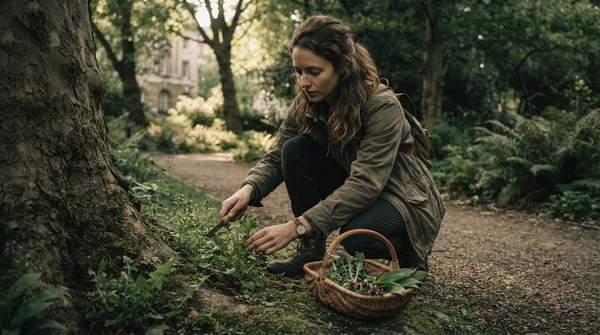
You can begin foraging for wild food in a city this week, with nothing more exotic than a park, a field guide, and a healthy respect for a few non-negotiable rules. The practice is neither new nor a passing fad: research by a University of Washington anthropology team found that foraging is a vibrant, persistent practice in U.S. cities, encompassing picking fruits and berries, harvesting edible "weedy" plants like dandelion, mustard, and plantain, and digging roots and bulbs for food and medicine. What beginners need is not more enthusiasm but a repeatable process—one that joins three things most articles treat separately: positive identification, contamination awareness, and ethical harvest.
The Revival of Urban Foraging: A Beginner's Guide
Although media stories have listed foraging among the top ten food trends in recent years, the University of Washington team's findings suggest it is not just a new vogue practice. Subsistence-based resource practices persist in the urban spaces of advanced capitalism, from picking berries for food to gathering fallen boughs and cones for holiday craft material. In other words, the city has always been a larder for those who know how to read it.
What has changed is accessibility. As the forager behind Flatcap Forager, Alvaro, puts it, urban foraging is less about memorising locations and more about understanding how landscapes behave. You begin noticing where the nettles appear, where the blackberries ripen, and which patches stay damp after rain. A park stops being simply a park. That shift in attention—not a shopping list of secret spots—is the real skill a beginner builds.
One caution before we go further: this guide is introductory. It does not replace local expert guidance or a proper field guide, it offers no medical or toxicological advice, and it deliberately skips mushrooms, which demand a higher level of expertise than leafy plants and berries. It also covers only a few common examples, not an exhaustive catalogue of edibles.
Your Urban Foraging Safety & Ethics Checklist
The checklist below is the heart of this guide. It systematizes the safety and ethical principles scattered across expert sources into a sequential decision framework: work through the steps in order, and if any step fails, the answer is "no-go"—do not harvest, or do not eat. The ImaginAcres urban foraging guide supplies the core precautions: check local laws, choose clean green spaces, avoid contaminated areas, and never eat anything unless you are 100% certain of its identification.
| Step | What to do | Why it matters |
|---|---|---|
| 1. Legal check | Research city or state regulations for the specific park or green space. | Foraging is allowed in some parks but prohibited in others. |
| 2. Site assessment | Reject roadsides, busy sidewalks, golf courses, industrial zones, agricultural streams, canals, and areas where chemicals are sprayed. | Road runoff, pollution, heavy metals, and pesticide drift may contaminate plants. |
| 3. Positive identification | Confirm the plant's identity with 100% certainty, cross-referencing several reliable field guides or a trusted app. | Some wild plants are toxic or even deadly. |
| 4. Part and timing | Verify which plant parts are safe to consume, and when. | Many wild plants can be toxic before they are fully ripe or before processing. |
| 5. Ethical harvest | Take only a small portion, snipping only a few leaves from each plant and harvesting only from abundant patches. | This allows the plant to continue growing and sustains the patch. |
The ethical dimension is not decoration. Writing on sustainable foraging, Brooke—a restoration coordinator whose guidance appears on Scriver—frames ethical practice around three concepts: harvesting mindfully, tending to the land you harvest from, and observing, learning, and sharing your knowledge and harvest with others. Notice how neatly that folds into safety: the same restraint that protects a dandelion patch also protects you from over-harvesting a plant you have not yet positively identified.