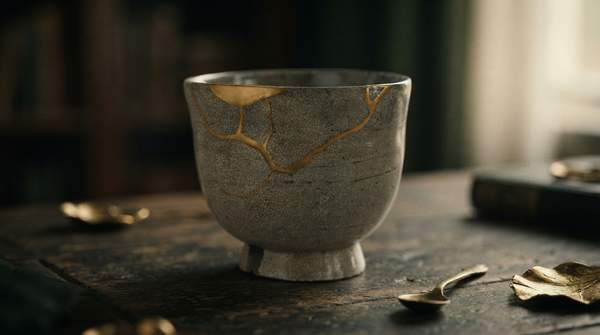
Kintsugi, the Japanese art of rejoining broken pottery with lacquer dusted in gold, silver, or platinum, is more than a repair technique. It is a physical argument that breakage belongs to an object's beauty and history rather than something to disguise—a tangible expression of the Japanese aesthetic of wabi-sabi, as the New Orleans Museum of Art's David Johnson describes it: the appreciation of imperfection, admiration for simplicity, and acceptance of transience. Understanding why the gilded seam was ever drawn requires returning to a disgruntled shogun and the quiet radicalism of the tea ceremony.
The Golden Embrace: Kintsugi's Enduring Philosophy
The word translates as "golden joinery," and the name is almost a manifesto. Where most repair traditions aim at invisibility, kintsugi applies precious metal precisely where the ceramic failed, making the fracture the most luminous part of the vessel. The craft, Johnson writes, highlights cracks as part of the beauty and history of an object rather than something to erase.
This inversion is deliberate. In a tradition that prizes the weathered, the uneven, and the worn, a repaired bowl is not a diminished object but an enriched one. The philosophy refuses the premise that wholeness is the only state worth honoring—and that refusal, as later writers observing the art's global revival have noted, is precisely what has carried a modest ceramic practice into contemporary conversations about healing and self-acceptance.