Slow travel works best in places that reward lingering, and three historic European towns—Quedlinburg in Germany, Pienza in Italy, and Èze in France—each offer a different reason to stay. Quedlinburg delivers medieval German architecture on a remarkable scale; Pienza pairs Renaissance heritage with Tuscan food traditions; Èze adds artisan perfumery to a perched medieval village above the Riviera. This comparison lays out what each town offers across three dimensions—architecture, signature local craft, and a hands-on immersive activity—so you can match a destination to your own interests rather than to a generic "most beautiful villages" list.
Discovering Europe's Historic Gems for Slow Travel
The appeal of these towns lies in what they let you do rather than what they let you tick off. Lori Sorrentino, writing on her Travlinmad slow travel blog, frames the Harz mountains of northern Germany as a place where "cobblestone streets wind through medieval architecture," and her account of Pienza centers on food, museums, and farm workshops rather than monuments. Trippers Terminal, in a guide to quiet European villages, describes Èze through its craft traditions and unhurried dining rather than its views alone.
That framing matters for how you choose. A town with a living craft—cheese-making in the Val d'Orcia, fragrance production on the French coast—gives you a reason to slow down and participate. A town with dense, walkable historic architecture gives you a reason to wander without an itinerary. The three towns below represent those two modes of slow travel, and one of them, Quedlinburg, is best understood as a destination for the second.
Quedlinburg, Germany: A Medieval Half-Timbered Wonderland
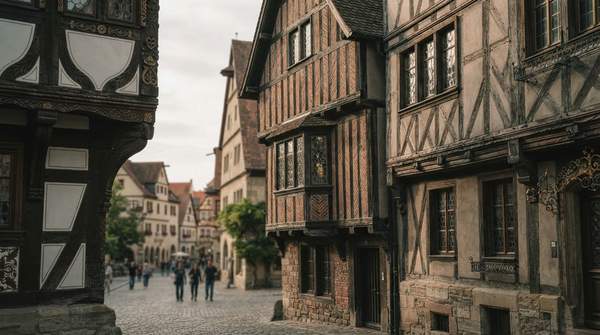
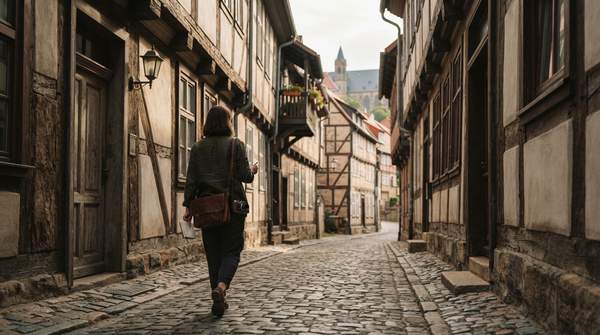
Quedlinburg sits in the Harz mountains near Hanover, and its defining feature is sheer density: Sorrentino counts more than 1,300 half-timbered houses in a town whose medieval core earned UNESCO World Heritage status. For a slow traveler, that number translates into days of unhurried wandering—every street in the old center offers a different arrangement of timber frames, gables, and cobblestones.
The immersive activity here is architectural exploration itself. Rather than a single workshop or factory tour, Quedlinburg rewards a self-guided walk through the historic center, reading the town's history off its facades. One honest limitation of the comparison: the travel accounts reviewed describe Quedlinburg's historical and architectural significance in detail, but they do not identify a signature local craft or product comparable to Pienza's cheese or Èze's perfume. If crafts are your priority, that gap should weigh in your decision; if medieval architecture is, Quedlinburg is the strongest of the three.