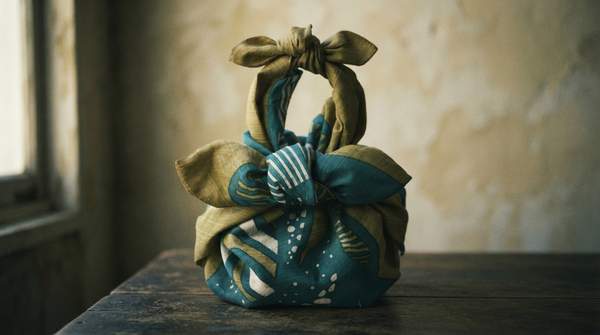
Furoshiki—the Japanese art of wrapping and carrying objects in a square of cloth—has survived more than a millennium of changing names, uses, and social habits. What began in the Nara period as a way to protect temple valuables became a bathhouse essential, then a merchant's tool, and today a reusable alternative to plastic bags and disposable gift wrap. If you want a single object that tells the story of Japanese daily life while also solving a very modern problem, the furoshiki is it.
The Ancient Roots of Furoshiki: From Temples to Bathhouses
The custom of wrapping things in cloth in Japan dates from ancient times. According to the historical accounts compiled by the Japanese furoshiki maker Musubi, a record survives from the Nara period (710–794) of people keeping valuables wrapped in fabrics called tsutsumi, a word built from roots meaning "to wrap." These early cloths were used to wrap and transport sacred objects in temples and to safeguard precious belongings—a protective role rather than a decorative one.
The name changed with the times, but the custom stayed the same. By the Kamakura period (1192–1338), documents refer to fabrics called koromozutsumi—literally "clothes wrapping"—which Musubi identifies as the direct predecessors of the furoshiki used today. Writing for the Musubi Kiln journal, the team there notes that during the Heian period (794–1185) the cloths were known as koromo tsutsumi as their main role shifted to wrapping clothing. The cloth was already proving the quality that defines it still: adaptability.