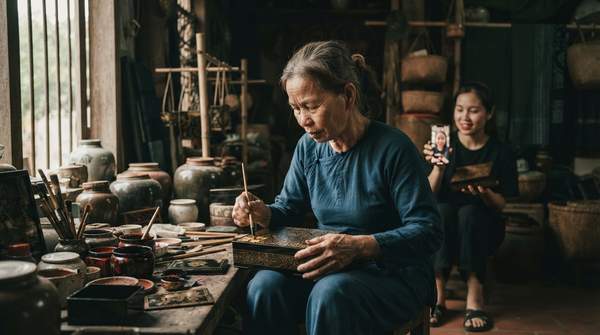
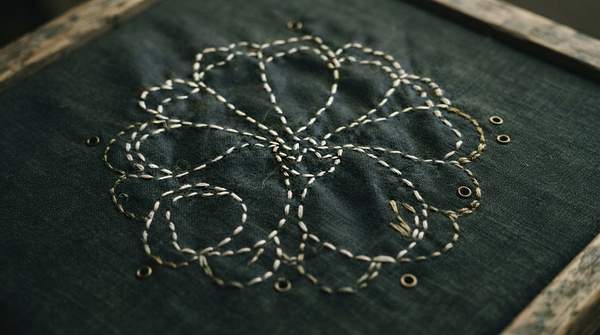
In Jammu & Kashmir, handicraft exports soared to ₹817.39 Cr during FY 2025-26, demonstrating a powerful economic revival for traditional artisans. This significant financial growth directly benefits countless local communities, transforming livelihoods across the region.
For years, traditional craftsmanship struggled against the perception of being a dying art. Yet, strategic government support and innovative market approaches are now proving it a vibrant, economically significant sector today. This shift challenges previous assumptions about the viability of cultural heritage.
The combination of policy support, infrastructure development, and market integration appears likely to sustain and further accelerate the growth of India's traditional craft economy. Union Minister Jual Oram recently affirmed this national focus on cultural appreciation and new initiatives driving traditional craftsmanship in 2026, inaugurating the Tribes Art Fest 2026 in Delhi, an event showcasing over 30 tribal art forms, according to Ddnews Gov In.
Government Initiatives Fueling Revival
- The revival of Nizamabad black pottery began with its Geographical Indication (GI) tag, secured in 2015, and continued under the One District One Product (ODOP) scheme, according to The Times of India.
- The ODOP initiative provided essential financial support, training, common facility centers, toolkits, and marketing platforms to artisans. This comprehensive aid led to easier access to bank loans and improved productivity for craftspeople.
These government schemes, including GI tags and ODOP, prove instrumental in providing the necessary infrastructure and market access. They transform fragmented artisan sectors into cohesive, bankable economic engines, directly correlating with significant economic uplift. This suggests that targeted policy, rather than broad economic growth, is the true catalyst for revitalizing niche cultural industries.
Regional Economic Impact and Artisan Empowerment
Jammu & Kashmir has registered nearly 5 lakh artisans and weavers, establishing a significant formal workforce dedicated to traditional crafts, according to Brighter Kashmir. This extensive registration moves traditional crafts beyond individual cottage industries to a recognized and supported sector. Handicraft exports from Jammu & Kashmir also reached ₹817.39 Cr during FY 2025-26, a testament to the region's strong economic contribution from these artisan communities.
The substantial number of registered artisans, coupled with these significant export figures, demonstrates the powerful economic potential unlocked by focused support for traditional crafts. Such investments are not merely preserving culture; they are actively building robust, export-driven economies that directly empower local communities. This formalization also creates a vital feedback loop, where economic success reinforces the cultural value, encouraging younger generations to embrace these ancestral skills.
Quality Control and Diverse Craft Recognition
Jammu & Kashmir now boasts 63 crafts registered under Geographical Indication (GI), with 39 originating from Kashmir and 24 from Jammu, according to Brighter Kashmir. This formal recognition establishes distinct identities and quality benchmarks for a wide array of regional products. Further bolstering quality, the Pashmina Testing & Quality Certification Centre (PTQCC) underwent an upgrade, increasing its testing capacity nearly threefold.
The PTQCC's enhanced infrastructure reduced the testing waitlist by around 40%. Upgrading quality certification infrastructure like this is a critical driver for scaling traditional crafts into an export-driven economy, rather than solely focusing on production or marketing. It directly enables greater market access and export potential by ensuring product authenticity and standards. Beyond market access, these certifications also instill consumer confidence, positioning Indian crafts as premium, authentic goods on the global stage.
Private Sector Innovation and Global Reach
Roots Studio establishes fair partnerships between indigenous artists and fashion brands through textile design licensing, according to luxurytribune. This model directly integrates traditional designs into global fashion, providing new revenue streams for communities. Roots Studio actively works with local communities possessing abundant artistic heritage to bring their arts and crafts to the fashion world.
These private sector innovators are proving that cultural heritage can be a powerful, sustainable global commodity. They offer a vital bridge between traditional artistry and modern market demands. While the Tribes Art Fest focuses on cultural preservation, initiatives like Roots Studio demonstrate direct commercial exploitation can also contribute significantly to artisan visibility and income. This synergy between cultural preservation and commercial innovation suggests a future where heritage is not just protected, but actively propagated through dynamic market engagement.
If current trends of strategic government backing and innovative private sector engagement continue, India's traditional craft economy appears poised for sustained growth, transforming cultural heritage into a powerful engine of national prosperity.