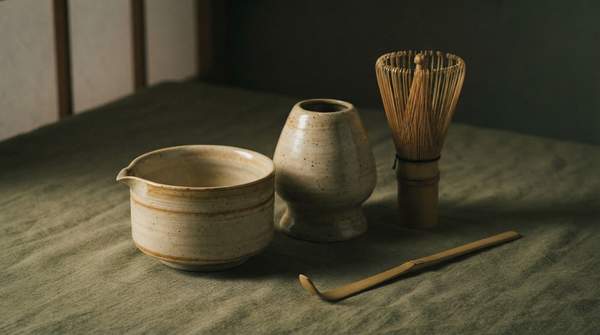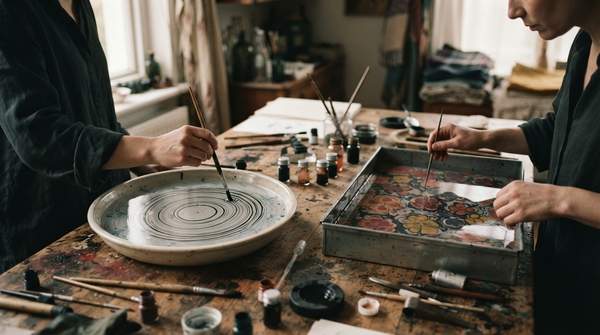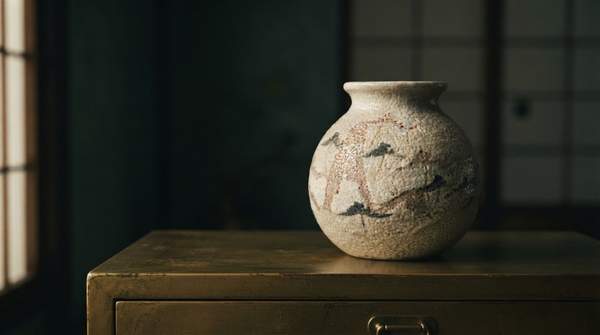
Japan's most celebrated ceramics—porcelain from Arita, the refined wares of Kyoto—tend to dominate the conversation, but the country's deeper glaze tradition lives in its regional kilns. There, the surfaces that collectors prize were never merely recipes: they were the negotiated result of local clay, pine firewood ash, the temperament of a kiln, and, from the medieval period onward, an aesthetic shaped by Zen Buddhism and the tea ceremony. Read together, these threads explain why a Bizen jar's toasted, unglazed-looking surface, a Hagi bowl's pale muteness, and a Raku tea bowl's deliberate irregularity are not accidents of taste but outcomes of distinct material and philosophical choices.
Beyond the Famous: Unveiling Japan's Regional Glaze Diversity
The story begins in the fifth century, when techniques transmitted from the Korean Peninsula produced Sue stoneware—Japan's first stoneware fired at high temperatures, and the point at which natural ash glaze was first discovered in Japanese kilns, as the ceramics studio TOKI recounts. Ito Ryo, writing for the ceramics retailer MUSUBI KILN, likewise traces the earliest Japanese glaze to Sue stoneware, those clay vessels fired with techniques that arrived from Korea.
What followed was not a single national style but a patchwork of regional kilns. By the Heian and Muromachi periods, kilns at Bizen, Shigaraki, and Tanba were producing robust, largely unglazed stoneware used across Japan, according to TOKI's account. The decisive turn came later: the introduction of Zen Buddhism and the birth of the tea ceremony, refined in the Momoyama period by the tea master Sen no Rikyu and his wabi-cha principles of simplicity, imperfection, and humility. Porcelain arrived only afterwards, in the Edo period, when Arita's products became famous and sought after in Europe. The regional glaze traditions, in other words, predate Japan's porcelain fame—and they carry a different logic entirely.