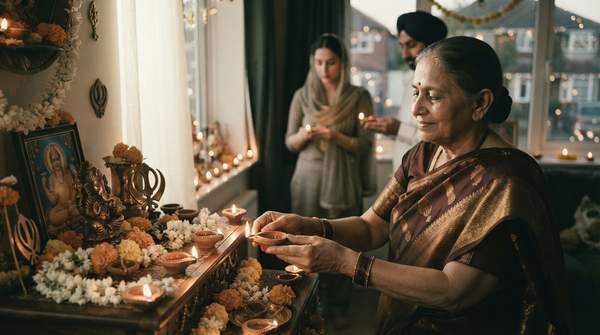
Diwali is celebrated primarily by followers of the Hindu, Jain, and Sikh faiths, and while the lamps look the same from outside, the events each community commemorates are entirely distinct. Hindus most commonly link the festival to the return of Rama to Ayodhya, though regional legends also connect it to Krishna's slaying of the demon Naraka and to the worship of Lakshmi. Jains observe the day as the anniversary of Mahavira's nirvana, his spiritual liberation, in 527 BCE. Sikhs mark Bandi Chhor Divas, commemorating Guru Hargobind's release from Mughal imprisonment in 1619. Understanding these separate histories explains why one autumn festival, stretching back more than 2,500 years by some accounts, carries such different meanings across India's religious traditions.
The Five Days of Diwali: Shared Traditions and Rituals
The name itself describes the festival's central act. Diwali derives from the Sanskrit Deepavali, meaning "row of lights," from deepa (lamp, light, or symbolically, knowledge) and avali (row or series), as the heritage encyclopedia Sahapedia explains. Ancient Indian texts, including the Padma Purana, Vishnu Purana, and Kalika Purana, along with Harsha's play Nagananda and stone and copper inscriptions, refer to the festival under names such as Deepotsava, Deepavali, and Divalige.
The celebrations span a sequence commonly counted as five days, beginning with Dhanteras on the thirteenth day of the fortnight ending in the new moon, or amavasya, and closing with Bhai Dooj, a festival dedicated to celebrating brothers. The observance bridges the last two days of the month of Ashwin and continues into the month of Kartik. Whatever legend a family honors, the shared vocabulary of the festival is light itself: rows of lamps that give the holiday its name, arranged to illuminate the darkest night of the lunar fortnight.
Diwali in Hinduism: Diverse Legends and Deities
Hindu tradition offers no single origin story, and scholars caution against forcing one. The return of Rama to Ayodhya is, as Sahapedia notes, the most popular lore associated with Diwali celebrations, but it is far from the only one. Writing in JSTOR Daily, Noor Chawla describes historical accounts of the festival as "an autumnal feast attributed to the celebration of various divinities, as of Lakshmi and of Bhavani, and also in honour of Krishna's slaying of the demon Naraka, and the release of 16,000 maidens, his prisoners."
That plurality is not a sign of confusion but of accumulation. As Sahapedia observes, the celebration "has greatly evolved, with various cross-cultural and -religious influences and stories of origin." The timing of celebrations and the specific rituals performed often varied among different communities and in different parts of the country, so a household honoring Lakshmi and one commemorating Krishna's victory could observe the same festival in meaningfully different ways. The common thread is the theme of light prevailing over darkness, expressed through whichever narrative a region or family holds dear.